
WHAT DO LEAN AND SIX SIGMA HAVE IN COMMON?

For example, in the six sigma arena, a problem is pursued as a discrete effort by a black or yellow belt (based on complexity). Root causes are formally determined, metrics developed, process capability assessed, and various solutions tested. When the appropriate solution is found, it is installed.
In the lean school of study, the problem is typically an identified waste that is noticed on routine measurements that are conducted in each work group on a periodic basis. Since all waste is a root cause of some loss, it is attacked automatically. By employing workplace management tools and just-in-time techniques, the waste is reduced. Lean has the benefit of a number of standardized techniques that can be applied within work groups. No expert is needed.
Which approach is best? It depends on what the specific problem is. In fact, both lean and six sigma are needed because they do different things. One cant afford to let big, dangerous process problems and quality issues go unattended until after the installation of lean systems. Conversely, one cannot afford to wait to implement lean techniques if the rest of the market segment is already moving in that direction. Six sigma cannot produce the required results in inventory reduction and cycle time on a sufficiently broad basis fast enough.

I think too many companies and even individuals place too much credibility towards Six-Sigma. I almost got sucked in ... almost.
Several years ago at the company I worked for we definitely did not lack problems, all sorts of problems, big, small, special cause, common cause and we definitely needed help to resolve our problems. Our problems were not opportunities they were debilitating issues that needed immediate attention.
Our President strongly suggested that we embrace Six Sigma and asked me to investigate and put together a proper and realistic cost benefit analysis. Message understood, I embarked on a learning journey to study and truly understand Six Sigma from the Industry Leaders who touted the impressive impact Six Sigma had on their organizations. I visited companies like Motorola, General Electric, Allied Signal and Kodak.
Here is what my research concluded. Six Sigma is not Six Sigma at each of the organizations. A Six Sigma Project typically had to deliver a minimum of 250K of savings. Often at the companies I visited they had no real criteria to initiate a Six Sigma project and often it was started based on intuition. So, I then turned to the ASQC body of knowledge which although informative became very scary. A true Certified Six Sigma Black Belt had to be proficient in 82 statistical tools and the time to properly train and Certify a Six Sigma Black Belt could easily take over 2.5 years and then consider another couple of years to work on a project and deliver results. Yes ... almost 5 years of investment before the organization would see a return. Sorry, this initiative would take us too long, so we needed something effective that could be deployed faster. We ended up using A3 Problem Solving using both 5 Why and fishbone diagrams, which although not perfect did save us.
Is there room for Six Sigma within an organization? Absolutely yes, I am just not sure if you need to have it on staff, you may e better to contract it out.
In our Powder Metal company we compacted our parts to pretty exacting dimensions. Our "Green" parts were then sintered in order to fuse the powder metal together. The sintering process inevitably warped our parts ... but no problem, we smashed them back into shape and tolerance in our coining process.
Enter Mike, we walked through our facility and he stopped me at one of our coining presses and asked what "Value Add" did the process provide? Well I mumbled some sort of plausible explanation which Mike immediately rejected. Mike said mathematically we should make our "Green" parts warped so when they were sintered they would come out to our desired shape and tolerance. To make this happen required a lot of data collection and modelling but the resulting benefit would be gigantic, not huge, not enormous ... Gigantic. It took us almost 2 years but we got to the point where 50% of parts to be coined was eliminated and we would not have been able to achieve this without Six Sigma. BTW, Mike had several advanced degrees in math and physics which just reinforced in my mind that Six Sigma could not be generally deployed.
While Mike was helping us on this initiative Mike shared another Six Sigma project he was working on for the past several months, collecting dat and doing data analysis. He showed me the challenge and I responded "just move the table 4 feet to the right", we tried it and it worked. Simple observation replaced advanced mathematics.
Then one day Mariela came home to advise me she had been selected to become a Certified Black Belt at her company. Initially, I was worried, would my hypothesis regarding the training and deployment of Six Sigma be busted? I had no need to worry, Mariela had a great Six Sigma instructor, still after 30 years one of the best ever. It did indeed take Mariela a full 2.5 years to train on all of the tools and methodologies associated with Six Sigma. Part of her certification required here to train and certify several Six Sigma Green Belts. At the time Mariela was working at a water bottling plant so her team decided to reduce the bottle fill variation by half a drop, yup half a drop. Close to two years later the team successfully accomplished their challenge. The result was CAPEX avoidance of another filling line worth around 15 million dollars at the time.
Lean is still the best methodology to quickly identify and eliminate waste, but you need to stay on top of it and often the best way to keep folks engaged is to refresh and update your Value Stream Maps.
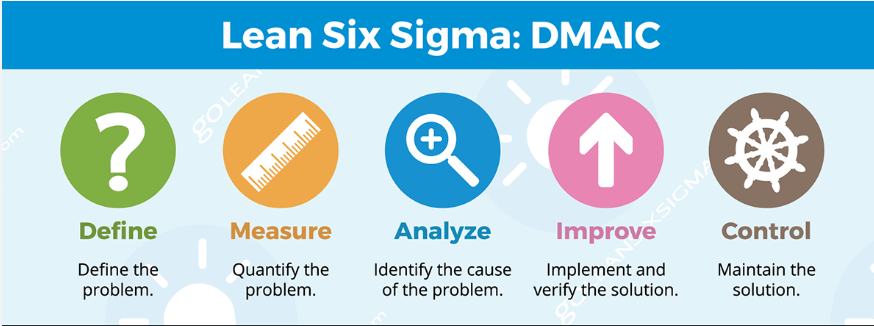
My parting rant ... Six Sigma revolves around the DMAIC process. DMAIC is simple to understand and many offer training for those to understand DMAIC, but the richness is not in understanding DMAIC, but rather knowing how to deep-dive in each sequence step of DMAIC. So when someone boasts they became a certified Six Sigma Green Belt through a on-line course or a quick workshop, I laugh because that is calling myself a Chef after I learned to boil water.
However, when you have a "Common Cause" problem and no real understanding of the true root cause, then Six Sigma should be your methodology of choice. You just need to decide if it it worth making a staffing investment or contracting out the need.


Comments